The gut health supplement industry wants you to think you need $80 probiotic capsules and specialty grocery items. You don’t. The basics — fiber, fermented foods, variety — are inexpensive if you know what to buy.
I’ve been meal prepping since 2022, mostly out of necessity (food budget of $280–320/month), and a lot of what I prep happens to be great for gut health. Not because I planned it that way — because fiber-rich, fermented foods are cheap.
What Gut Health Actually Means (In Brief)
Your gut microbiome — the trillions of bacteria living in your digestive tract — affects digestion, immune function, mood, and metabolism. Feeding those bacteria the right things means:
- Fiber — prebiotic fuel for good bacteria. Oats, lentils, beans, vegetables, fruit.
- Fermented foods — actual live bacteria to replenish the ecosystem. Yogurt, kefir, kimchi, sauerkraut, miso.
- Variety — the more different plant foods per week, the greater diversity of gut bacteria. Research suggests 30+ plant varieties/week as a target (easier than it sounds).
Nothing here requires a health food store.
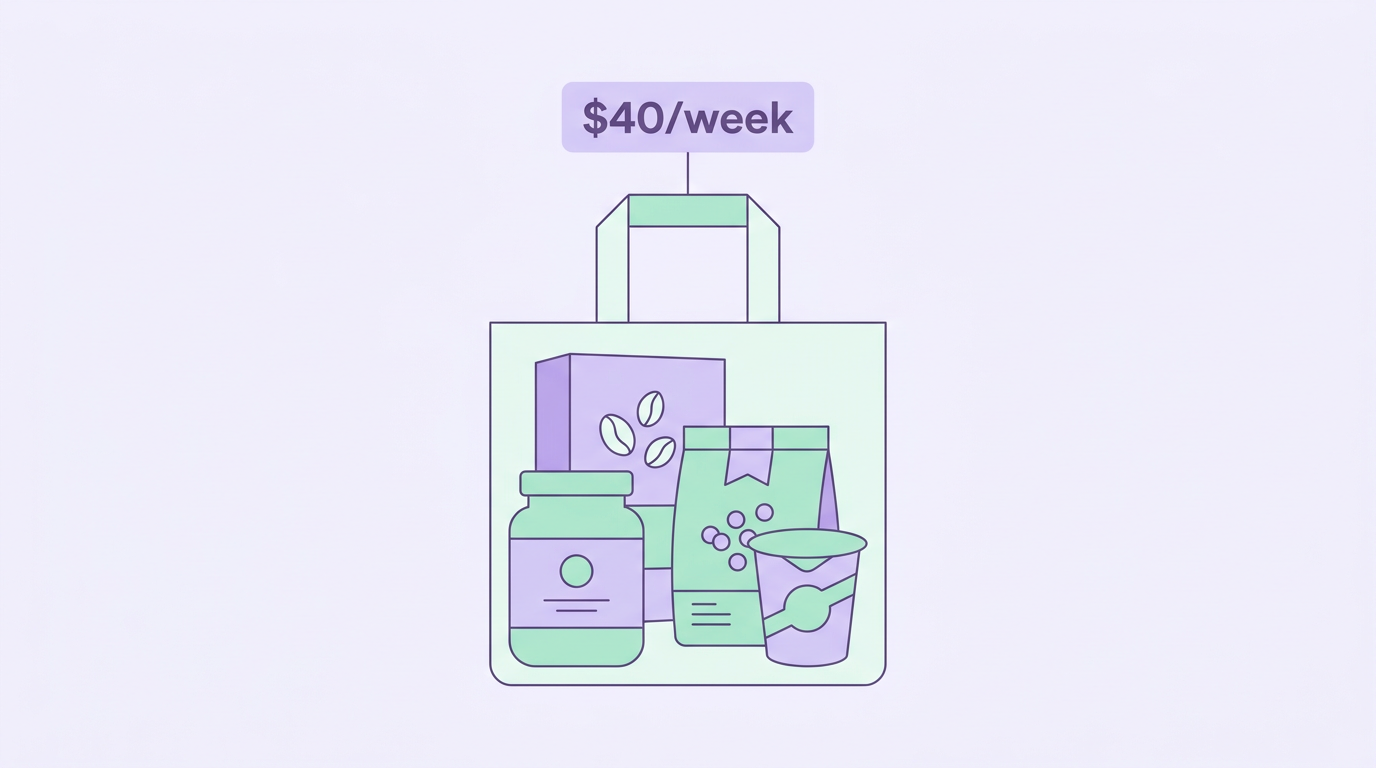
The $40/Week Shopping List
This is realistic for one person in a mid-cost city. Adjust quantities for your area.
Staples ($18–20):
- Rolled oats, large container: ~$4
- Dried lentils, 1lb: ~$2
- Dried black beans, 1lb: ~$2
- Brown rice or farro, 2lb: ~$3
- Eggs, 1 dozen: ~$4
- Greek yogurt, large container: ~$5
Produce ($12–14):
- Bananas, 1 bunch: ~$1.50
- Apples, 4–5: ~$3
- Baby spinach or mixed greens, bag: ~$3
- Broccoli or cabbage: ~$2
- Carrots, 1lb: ~$1.50
- Garlic bulb: ~$1
Fermented/Gut-Specific ($5–6):
- Sauerkraut or kimchi, small jar: ~$3–4 (or make your own for much cheaper)
- Miso paste: ~$3 for a container that lasts 2–3 months
Total: roughly $35–40, and several items last multiple weeks.
A Realistic 3-Hour Sunday Prep
This is what I actually do, not an optimized ideal.
Batch 1 — Grains (20 min active, 45 min passive): Cook a large pot of brown rice or farro. Cook lentils separately. These become bases for multiple meals.
Batch 2 — Roasted vegetables (10 min prep, 35 min oven): Toss broccoli, carrots, and anything else on hand in olive oil, salt, pepper. 400°F until done. I roast a whole sheet pan and portion it through the week.
Batch 3 — Overnight oats (10 minutes): Four mason jars: ½ cup oats, ½ cup yogurt, ½ cup milk, pinch of chia seeds, whatever fruit you have. Refrigerate. Breakfast for 4 days, ready to grab.
Soft-boil 6 eggs while something else is in the oven. Snacks and quick protein additions.
Total active time: about 50 minutes. The rest is just waiting.
Making Fermented Foods Affordable
Store-bought kimchi runs $4–8 for a jar. It lasts 1–2 weeks as a condiment. Worth it for the probiotic density.
But making sauerkraut at home is genuinely cheap — a head of cabbage ($1.50), salt ($0.20), a jar. Ferments in 5–7 days on the counter. I haven’t bought sauerkraut in a year.
Greek yogurt is your everyday fermented food. I go through a large container ($5) in about a week between breakfast and using it in sauces. Full-fat versions have more fat-soluble vitamins. The gut benefit comes from live cultures — check that your brand says “contains live and active cultures.”
Kefir is worth adding if you can find it at a reasonable price — it has a more diverse bacterial profile than yogurt. I grab it when it’s on sale.
The 30 Plants Per Week Goal (Without Overthinking It)
This sounds daunting but it’s not — herbs, spices, different types of legumes, and all vegetables count. My typical week:
Oats, lentils, black beans, brown rice, broccoli, carrots, spinach, garlic, onion, banana, apple, cabbage (sauerkraut), eggs (not plants but adds variety), tomatoes, olive oil (minimal). That’s already 13–14 without trying.
Add one new vegetable a week, cycle through different beans, use herbs — you’ll hit 20–25 easily.
Common Questions
Do I need probiotic supplements if I eat fermented foods? For most healthy people, no. Food-based probiotics are well-supported by research. Supplements are useful for specific conditions (after antibiotics, IBS) but not necessary for general gut health maintenance.
Is fiber from canned beans as good as from dried? Yes, essentially equivalent. Rinse canned beans to reduce sodium. The convenience of canned is worth it for weeknight cooking.
How long does it take to notice gut health improvements? Most people report changes in digestion within 2–4 weeks of consistently eating more fiber and fermented foods. Energy and mood changes tend to follow. It’s not linear — some bloating is normal as your microbiome adjusts.
What about the bloating from beans? Start with smaller amounts and increase gradually. Soaking and rinsing dried beans before cooking reduces the oligosaccharides that cause gas. It gets better as your gut adapts.